

Positioning amid geopolitical tensions in the Middle East – Counterpoint March 2026
8 mins to read this article

What you need to know
-
Events in Iran and the US strike have increased geopolitical uncertainty. We’re therefore buying gold, funded by selling US Treasuries. Treasuries have risen since our last purchase, but fiscal spending ahead of the US midterms could become a concern for markets, so we’re trimming our exposure.
-
We’re also continuing to diversify our equity allocation. We’re reducing US equities and buying attractively valued small-capitalisation companies in developed markets. These firms focus more on their domestic economies, which gives them some insulation from global events. They also stand to benefit from fiscal stimulus.
-
Political uncertainty is rising in the UK. So we’re selling gilts and introducing emerging market bonds in local currency. They offer compelling yields, should benefit from a weaker dollar and provide exposure to selected oil exporters. Given the rise in geopolitical uncertainty, we’re holding some extra cash to use if new opportunities arise.




Note: Any reference to portfolio positioning relates to our flagship core discretionary portfolios. Clients invested in other strategies, or in bespoke and advisory portfolios, should consult their Client Advisor.
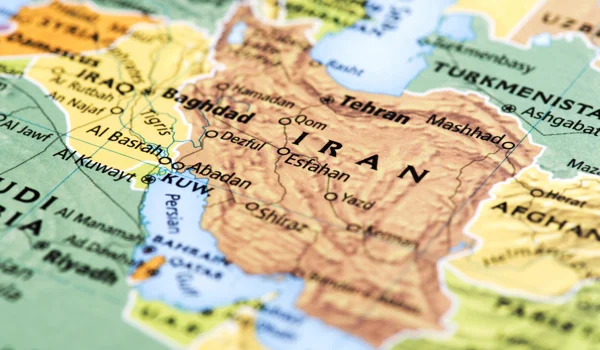
What to make of Iran
The attack by the US and Israel on Iran this Saturday has been bubbling for some time, but the weekend’s timing came as somewhat of a surprise. Oil prices had been rising in recent weeks due to expectations that supplies could be disrupted by a military conflict. Heightened uncertainty is likely to lend further support to oil prices. It could also lift safe-haven assets such as gold. The length and scale of the conflict are key for investors’ next moves.
These geopolitical events haven’t come out of the blue. We started to prepare for them some time ago. In recent months, uncertainty around Venezuela, Greenland and Iran led us to increase the quality of our fixed income exposure. We took profits on corporate bonds with demanding valuations and bought safer government bonds.
Where permitted, we also extended our US equity warrant. This is an insurance-type instrument that rises in value when US equities fall, partly mitigating downside risks. We also hold gold, broad commodities and high-quality bonds, including those that may benefit if inflation rises.
Our investment team is very focused on what’s happening to the Strait of Hormuz and the implications for oil, including the decision of the oil producers’ cartel (OPEC+) to increase production to mitigate the price rise caused by the disruptions. Apart from energy, we’re watching maritime shipping, aviation, supply chains, defence and insurance, just to name a few, along with the impact on the global economy. The team continues to explore these questions:
- Can the US meet its geopolitical objectives quickly?
- Is Iranian retaliation likely to lead to a much broader conflict?
- Will stimulus cushion stagflation risks (slower growth, higher inflation)?
- Does this event make interest rate cuts more or less likely?
- Which asset classes, regions and sectors stand to benefit or lose?
Investing in the midst of geopolitical events
We’re moderately overweight equities and underweight bonds. While the US remains key for long-term growth and AI exposure, we tactically prefer emerging markets and Europe because valuations are more attractive. Emerging markets also benefit from a weaker dollar and offer diversification within the AI theme through China, Taiwan and South Korea. Europe gives us exposure to themes such as defence and infrastructure.
We’re now entering a new position in attractively valued small-capitalisation companies (small caps). 60% of this allocation is in US small caps. These firms rely more on domestic business and are therefore less exposed to global events. They can also benefit from US policy support. The rest is in European and UK small caps (25%) and Japan (15%), which adds geographical diversification. We’re funding this allocation by reducing our position in US equities.
We think the events in the Middle East are likely to support gold. We’re therefore increasing our exposure back to overweight and financing this by selling US Treasuries. Geopolitical uncertainty has slightly supported our US Treasury position. However, concerns around US debt have increased due to potential spending ahead of the midterms, so we’re reducing exposure.
Importantly, we continue to diversify our fixed income allocation by introducing emerging market bonds in local currency, which we plan to add in the very near term depending on market conditions. We believe these bonds will benefit from dollar weakness and the emerging market central bank rate cuts we expect this year. They also offer attractive yields, diversification and solid fundamentals, including a higher share of oil exporters relative to developed market sovereign bonds. We’re funding this purchase by selling UK gilts, given rising domestic political uncertainty, while retaining some cash to redeploy if other opportunities arise.
Stay calm and carry on
We advise clients not to react to headlines. Staying invested and diversified across regions helps returns compound over time. 80 years of data suggest that although markets may lag over three months, equity returns six and twelve months after a geopolitical shock are similar to those in other periods.
Our US equity position is important given the dominance of the US in global markets, but well diversified. Alongside standard shares, we hold equal-weighted US equities. This increases exposure to financials and industrials that may benefit from deregulation and stimulus. It also reduces reliance on technology, where valuations are high. We also limit currency effects to reduce the impact of a weaker dollar when converting into euros.
For us, diversification is more effective than reaction. A wobble in parts of the portfolio, such as equities affected by Middle Eastern tensions, may be offset by gains elsewhere, such as commodities. We’re comfortable with our overall strategy but continue to look for ways to position for opportunities while mitigating downside risks.
We take time to listen
Thank you for reading our monthly update.
Please contact us if you have any questions, remarks or suggestions regarding this update.
Take a look at our other publications below:








Always there for you wherever you are
At Quintet, we pride ourselves on being small enough to really get to know you, yet big enough to give you easy access to the best the world of finance has to offer. Whatever your needs, we will provide objective insights, advice, products and services tailored to your personal goals. And with offices in 30+ cities across Europe and the UK we are always there for you wherever you are. Why not come and talk with us today?
This document is designed as marketing material. This document has been composed by Quintet Private Bank (Europe) S.A., a public limited liability company (société anonyme) incorporated under the laws of the Grand Duchy of Luxembourg, registered with the Luxembourg trade and company register under number B 6.395 and having its registered office at 43, Boulevard Royal, L-2449 Luxembourg (“Quintet”). Quintet is supervised by the CSSF (Commission de Surveillance du Secteur Financier) and the ECB (European Central Bank).
This document is for information purposes only, does not constitute individual (investment) advice and investment decisions must not be based merely on this document.
Whenever this document mentions a product, service or advice, it should be considered only as an indication or summary and cannot be seen as complete or fully accurate. All (investment) decisions based on this information are at your own expense and at your own risk. It is up to you to (have) assess(ed) whether the product or service is suitable for your situation. Quintet and its employees cannot be held liable for any loss or damage arising out of the use of (any part of) this document. All copyrights and trademarks regarding this document are held by Quintet, unless expressly stated otherwise. You are not allowed to copy, duplicate in any form or redistribute or use in any way the contents of this document, completely or partially, without the prior explicit and written approval of Quintet. See the privacy notice on our website for how your personal data is used (https://www.quintet.com/en-gb/gdpr).
The contents of this document are based on publicly available information and/or sources which we deem trustworthy. Although reasonable care has been employed to publish data and information as truthfully and correctly as possible, we cannot accept any liability for the contents of this document.
Investing involves risks and the value of investments may go up or down. Past performance is no indication of future performance. Any projections and forecasts are based on a certain number of suppositions and assumptions concerning the current and future market conditions and there is no guarantee that the expected result will ultimately be achieved. Currency fluctuations may influence your returns.
The information included is subject to change and Quintet has no obligation after the date of publication of the text to update or inform the information accordingly.
Copyright © Quintet Private Bank (Europe) S.A. 2026. All rights reserved. Privacy Statement